How to Write a Fortnightly Plan in 15 Minutes (2026 Curriculum)
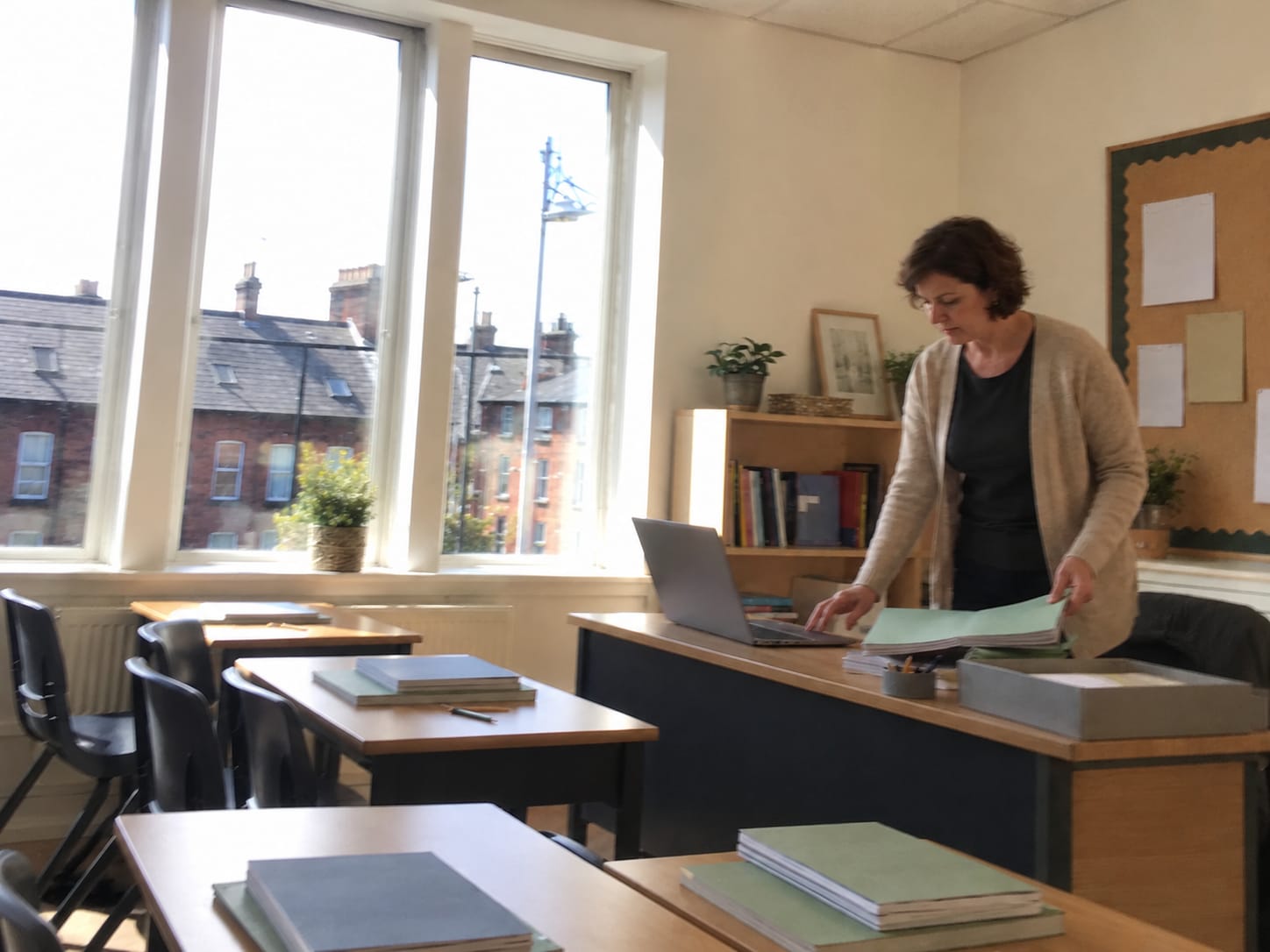
The fortnightly plan has a way of surfacing at the least convenient moment: the end of a long week, or an evening you’d rather spend on something else.
We’ve all been there. The blank Word document. The copy-paste from last time. The 45-minute slog through curriculum PDFs trying to find the right strand unit. By the time you’re done, it has taken far longer than it should, and the plan feels more like a compliance exercise than something that’ll actually help you teach.
Here’s how to get a solid fortnightly plan done in about 15 minutes, one that’s genuinely useful in the classroom, not just something to show an inspector.
Want a template to work from? See a completed fortnightly plan for a real class, every section filled in and free to download as a PDF, then use the 15-minute method below to make your own.
Is a fortnightly plan the same as recorded preparation?
Yes. “Recorded preparation” is the term the Department and the Inspectorate use for the planning a teacher writes down and keeps: your long-term plans, your short-term plans, and your Cúntas Míosúil. Your fortnightly plan is your short-term recorded preparation. When an inspector asks to see your preparation, this is one of the documents they mean.
That matters for two reasons. First, the standard an inspector reads for is coherence, not length: they want to see that your short-term recorded preparation follows from your long-term plan and reflects what is actually happening in your room. Second, the format is yours. The Guidance on Preparation for Learning, Teaching and Assessment is explicit that recorded preparation is personal and professional, so a plan that is concise and genuinely useful to you meets the standard better than a long template you never look at.
Before you start: what actually needs to be in it?
The Department of Education’s Guidance on Preparation for Learning, Teaching and Assessment (updated 2026, building on the 2021 original) gives teachers much more flexibility than many realise. Your recorded preparation doesn’t need to follow a rigid template. But at minimum, your fortnightly plan should include:
- The dates: which fortnight you’re covering
- The subjects: what you’re teaching
- The curriculum content: content objectives (1999) or Learning Outcomes (redeveloped) you’re addressing
- Learning experiences / activities: what the children will actually do
- Assessment: how you’ll know if they’re learning
That’s it. You don’t need separate sections for differentiation, integration, linkage, and resources unless your school has decided to include them. The NCCA guidance explicitly moved away from prescribing those sections.
The 15-minute method
Minutes 1–3: Set the frame
Open your plan (whether it’s a Word doc, a Google Doc, or a planning tool) and fill in the basics:
- Dates: What fortnight is this? (e.g., 23 March – 3 April 2026)
- Class level: Yours
- Subjects: Pick the subjects you’ll cover this fortnight
A practical tip: most teachers cover the same core subjects every fortnight (English, Gaeilge, Maths) and then rotate through the others. If that’s your pattern, carry forward the same subject list from your last plan and just swap out the rotating subjects.
Minutes 3–8: Select curriculum content
This is where most of the time usually goes, and it’s where being organised pays off.
If you have a long-term plan: your monthly content should already be mapped out. Your fortnightly plan is just selecting the specific content objectives or Learning Outcomes from what you allocated to this month. This should take 2–3 minutes of selection, not 20 minutes of searching.
If you don’t have a long-term plan: you’ll need to pick content objectives or Learning Outcomes directly. Work through the curriculum in sequence and pick up where you left off last fortnight. For each subject, select 2–4 objectives or outcomes. You don’t need to cover everything; you need to cover what’s realistic for two weeks of teaching.
A note on the parallel curriculum: right now, you’re likely using Learning Outcomes for English, Gaeilge, and Maths (from the 2019 and 2023 specs), and content objectives for everything else (from the 1999 curriculum). That’s the reality of the transition; just make sure you’re pulling from the right version for each subject.
Minutes 8–13: Add learning activities
For each subject, jot down 2–3 activities or learning experiences. These don’t need to be elaborate. Think about what the children will do:
- Shared reading and discussion of a class novel
- Paired work on number problems using concrete materials
- Group research on a local history topic
- Outdoor observation and recording for Science
- Drama improvisation exploring a theme from SPHE
Write them in plain language. Your plan is a working document for you, not a lesson plan for someone else to follow. If “Comprehension: Qs on Ch. 4” makes sense to you, that’s enough.
Time-saver: if you use similar activities across fortnights (and you will; that’s good teaching, not laziness), keep a running list of your go-to activities for each subject. Copy, paste, adjust for this fortnight’s content.
Minutes 13–15: Assessment notes
For each subject (or for the fortnight as a whole), note how you’ll assess learning. This can be as simple as:
- Teacher observation during group work
- Oral questioning
- Written task / worksheet
- Self-assessment checklist
- Pupil conferencing
You don’t need a different assessment approach for every subject every fortnight. If your primary method this fortnight is teacher observation and oral questioning across most subjects, say so once and note any exceptions.
What makes a fortnightly plan actually useful?
The best fortnightly plans aren’t the longest or most detailed. They’re the ones you actually look at during the week. A plan that sits in a folder untouched until the Cúntas Míosúil is due has failed its purpose.
A useful plan:
- Fits on one page (or two at most). If it’s longer, you’re over-documenting.
- Uses language you’d actually say. Not curriculum-speak, but what you’d tell a colleague at the photocopier.
- Reflects what you’ll realistically cover. Better to plan 80% of what you’ll actually teach than 120% of what looks impressive on paper.
- Connects to last fortnight. A quick note at the top, like “Continuing from: fractions (halves and quarters)”, keeps the thread.
The timing problem
The reason fortnightly plans feel painful isn’t because they’re hard. It’s often because they happen at the wrong time: late, tired, after a full week or weekend of everything else.
Two things that help:
1. Do it on Friday afternoon. Ten minutes at the end of your school day, while the week is fresh, is worth more than a longer, tireder session later when you can barely remember what you taught. Some teachers keep a “Friday 10” habit: the last 10 minutes of their work day, plan roughed out for the next fortnight.
2. Use your long-term plan properly. If your LTP has monthly content mapped, your fortnightly plan is 80% done before you start. You’re just selecting and adding activities. The long-term plan is the investment; the fortnightly plan is the return.
A word about templates
There are plenty of templates floating around: from the NCCA, from Oide (formerly NIPT), from teaching resource sites, from colleagues. They all work. Pick one that suits you and stick with it. The worst thing you can do is spend an hour formatting a template instead of 15 minutes writing a plan.
What matters isn’t the template. It’s the thinking you do when filling it in: the five minutes where you sit with the curriculum content and ask yourself: “What do my children need next, and how will I help them get there?”
That’s the planning that matters. Everything else is paperwork.
Want to see the finished product before you start? Download a sample fortnightly plan PDF. And if you’d like a planning tool that takes care of the curriculum content selection for you, with suggestion chips, smart date pre-fill, and PDF export, Pleanáil has a free 30-day trial for teachers. Your first plan takes about 15 minutes. The second one takes less.
Plan against the real 2026 curriculum
Pleanáil loads the redeveloped and 1999 curriculum for you. Tick the Learning Outcomes, tap a suggestion or two, and your fortnightly plans, Cúntas Míosúil and long-term plans assemble themselves. A plan that used to take an evening takes about fifteen minutes.
Start your free 30-day trialFor solo teachers and whole schools.