The Personal Pupil Plan is gone: what replaces it from September 2026
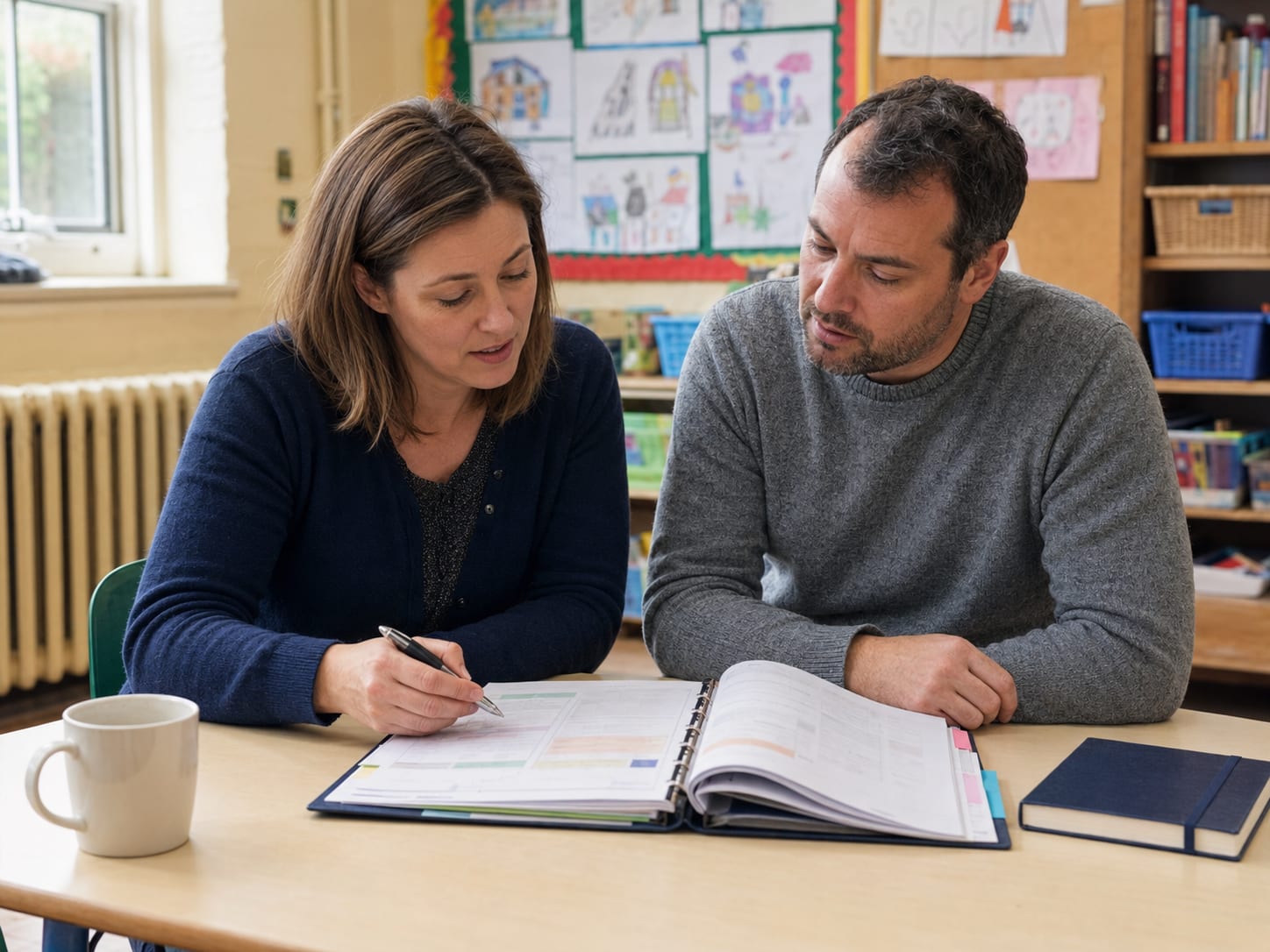
If you support pupils who have Special Needs Assistant hours, you have probably seen the questions flying around staff WhatsApp groups this summer: is the Personal Pupil Plan finished, and what are we meant to use instead?
Here is the plain version, checked against the circular itself. For the wider circular explained for class teachers, see Circular 0032/2026: the new SNA role explained.
What actually changed
The Department of Education published Circular 0032/2026, The Role of Special Needs Assistants, on 3 June 2026. It applies from the start of the 2026/27 school year. Crucially, it supersedes circulars 30/2014 and 71/2011. Circular 30/2014 is the one that introduced the Personal Pupil Plan (PPP) for pupils receiving SNA support, so with that circular retired, the PPP as a named document goes with it.
That is the part that is true. The part that needs a small correction is what comes next.
What replaces the PPP
You may have seen the replacement described as an “integrated care needs plan” or similar. That is a fair description of the spirit, but it is not the Department’s term, and it is worth knowing the official language because it is what an inspector, a SENO or your own principal will use.
The circular’s replacement construct is the Student Support Plan (SSP), held within the pupil’s Student Support File, which tracks the pupil along the Continuum of Support. The SSP is defined as the individualised learning and care plan that sets out the pupil’s strengths, interests and needs, alongside the priority learning and care needs agreed as the basis for targets and interventions.
In other words, care needs are no longer a separate plan bolted on for SNA-supported pupils. They are folded into the single Student Support Plan that many SETs already keep. If you have been running proper support files on the Continuum of Support, you are most of the way there already.
A Student Support Plan, per the circular, contains:
- SMART targets: specific, measurable, achievable, relevant and timebound.
- The level and type of support to be provided.
- The personnel involved in delivering the interventions.
- A review of the pupil’s response to intervention, revisited regularly across the year.
Two more terms changed name in the same circular: “primary care needs” is now core care needs, and “secondary care associated tasks” is now student support duties.
Who leads it, and where the SNA fits
The circular is clear that the SSP is led by a member of the teaching staff, typically the class teacher or the special education teacher, under the direction of the principal. Section 22 of the Education Act puts the teacher’s responsibility for the pupil’s education and progress first, and the circular restates it: the SNA supports learning under the direction of the teacher and does not have a teaching role.
What is new is that the SNA is now formally part of the planning and review process. They contribute to developing and reviewing the SSP, and schools must ensure SNAs have access to the plan for the pupils they support. For SETs, that means your review meetings now explicitly include the SNA’s insight, which for most is a description of what already happens rather than a new task.
What it means if you are the SET
For most special education teachers, this is a change of vocabulary and emphasis more than a change of workload:
- The pupils who had a PPP now sit under a Student Support Plan like everyone else on your caseload. One framework, not two.
- Care needs belong inside that plan, described as priority needs with targets, not on a separate sheet.
- Build in the SNA’s contribution to your review cycle, and record it.
- Keep using the Continuum of Support and the NCSE Student Support File structure. That is still the spine.
The review rhythm matters more than the paperwork, as it always has: targets set early, evidence gathered, reviewed and reset. A plan whose targets are reviewed on time is worth more, to the child and in any inspection, than a beautiful document that never loops back.
What it means if you are the principal
The circular puts several things squarely on the principal or their delegate:
- Deployment of SNAs on the basis of core care needs across the school, not allocation to a named child.
- Ensuring SNAs have access to the relevant Student Support Plans.
- School Community Time (SCT): a minimum of 10 hours per year for SNAs on student support planning and review, plus up to 10 hours on policy and whole-school collaboration, alongside a learning and development bank of at least 10 hours.
Practically, that means your school’s SSPs need to be current, findable and shareable with the right SNA at the start of the year, not sitting in one teacher’s drawer.
Where to start in September
- Reframe any remaining PPPs as Student Support Plans within each pupil’s support file.
- Fold core care needs into those plans as priority needs with targets, rather than keeping a separate care document.
- Add the SNA’s input to your planning and review meetings, and note it as part of their School Community Time.
- Read the circular and its accompanying guidance document in full before you set your school’s approach, and check the current version on gov.ie.
Where Pleanáil fits
Pleanáil is a curriculum planning tool, not a special-education case management system, so it does not hold Student Support Plans or pupil care data, and it should not. What it does do is take the curriculum planning off your plate so the time you save goes back into the support work that only you can do.
Pleanáil supports composite planning across multiple class levels, built originally for SETs and multigrade teachers: one plan can hold curriculum content from every level your caseload spans, and your Cúntas Míosúil builds from what you actually planned. Set up your support planning free.
Plan against the real 2026 curriculum
Pleanáil loads the redeveloped and 1999 curriculum for you. Tick the Learning Outcomes, tap a suggestion or two, and your fortnightly plans, Cúntas Míosúil and long-term plans assemble themselves. A plan that used to take an evening takes about fifteen minutes.
Start your free 30-day trialFor solo teachers and whole schools.