Science Week 2026 (8-15 November): Water Activities That Slot Straight Into Your Plan
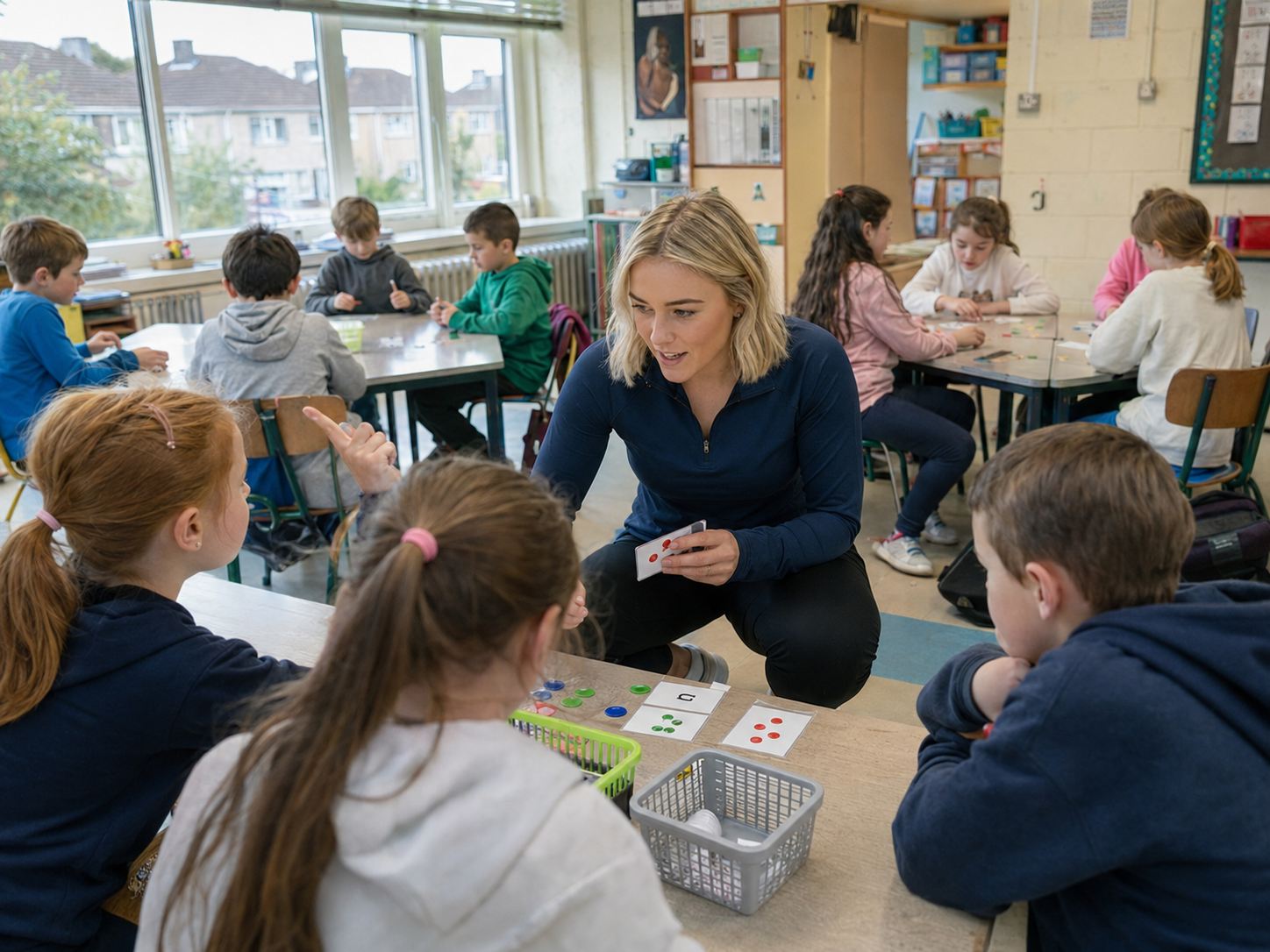
Science Week 2026 runs from Sunday 8 to Sunday 15 November, and this year’s theme is Water: From Molecule to Ocean. It is the one week of the year when a themed science fortnight practically plans itself: a national theme, free events around the country, and a topic with a hands-on investigation for every class level.
Here is a set of water investigations by class level, the curriculum homes they belong to, and how to record the week so it shows up properly in your plan and your Cúntas Míosúil.
Which curriculum document does Science Week belong to?
It depends on your school’s enactment choice this year. If your school is enacting STEM as its 2026/27 area, your science planning draws on the Science, Technology and Engineering specification and its Learning Outcomes. Every other school plans science from the 1999 Science curriculum: strands, strand units and content objectives. Both are fine, and which document each subject uses this year is a school-level fact, so check before you write the plan. You can browse the real Learning Outcomes for your class in our free Learning Outcomes explorer.
Either way, the four 1999 strands give a useful map for the theme: water touches Materials (dissolving, mixing, change), Energy and Forces (floating, sinking, pushing), Living Things (what needs water to live) and Environmental Awareness and Care (conserving it). We wrote a full guide to the 1999 Science curriculum if you want the strand detail.
Water investigations by class level
Infants
- Sink or float stations: predict, test, sort, talk about why
- What dissolves? Sugar, sand, salt, rice in warm water
- Watching ice melt: where did the water go?
First and Second Class
- The water cycle in a bag: a sealed ziplock on a sunny window, evaporation and condensation visible by home time
- Fair-test splashdown: which material makes the best umbrella for teddy?
- Counting water use at home for a day, then a class pictogram
Third and Fourth Class
- Filtering mucky water through sand, gravel and cloth: who gets it clearest?
- Capacity and estimation: order the containers, then measure (Maths integration earns its keep here)
- A local water walk: where does our water come from, where does the drain go?
Fifth and Sixth Class
- Design and make a water filter or a rain gauge, then improve it after testing
- Hot and cold water density: the classic colour-layering investigation
- A school water audit: measure, graph, and propose one change (data, persuasion writing, and citizenship in one project)
Every one of these carries a genuine investigation, so the working-scientifically skills side of the curriculum is covered by the activity itself: a useful habit is naming one investigation the children run themselves in each fortnight’s science.
The timetabling gift: science is a monthly allocation now
Under the Primary Curriculum Framework, Science, Technology and Engineering has a monthly time allocation, which means a heavy Science Week balanced by lighter science weeks either side is exactly how the allocation is designed to work. Block the week guilt-free; the month balances. The full tables are in our guide to the 2026 subject time allocations.
Recording it: one plan, and the Cúntas takes care of itself
Science Week lands mid-fortnight for most planning cycles, so it belongs in the fortnightly plan you are already writing:
- Focus of Learning: what the children will understand about water by the end of the fortnight, in a sentence or two
- Learning Experiences: the investigations above, plus any Science Week event your class attends (local events are listed on scienceweek.ie)
- Assessment: predictions versus findings, the improved design, the completed audit
Integration is where the week earns its hours: the local water walk is Geography, the audit graphs are Maths, the “how we filtered the water” write-up is procedural writing. Name the links in the plan and the week counts everywhere it genuinely happened. If you plan in Pleanáil, your November Cúntas Míosúil then picks the whole week up from the plan: work covered, curriculum references and all. Our fortnightly plan template shows the structure if you plan on paper.
Get the Science Week fortnight planned in one sitting: three fortnightly plans, a real Cúntas Míosúil and long-term plans, free for 30 days, no card needed. Create your first plan free.
Plan against the real 2026 curriculum
Pleanáil loads the redeveloped and 1999 curriculum for you. Tick the Learning Outcomes, tap a suggestion or two, and your fortnightly plans, Cúntas Míosúil and long-term plans assemble themselves. A plan that used to take an evening takes about fifteen minutes.
Start your free 30-day trialFor solo teachers and whole schools.